Product Lifecycle Management (PLM): Complete Guide, Stages and Tools (2026)
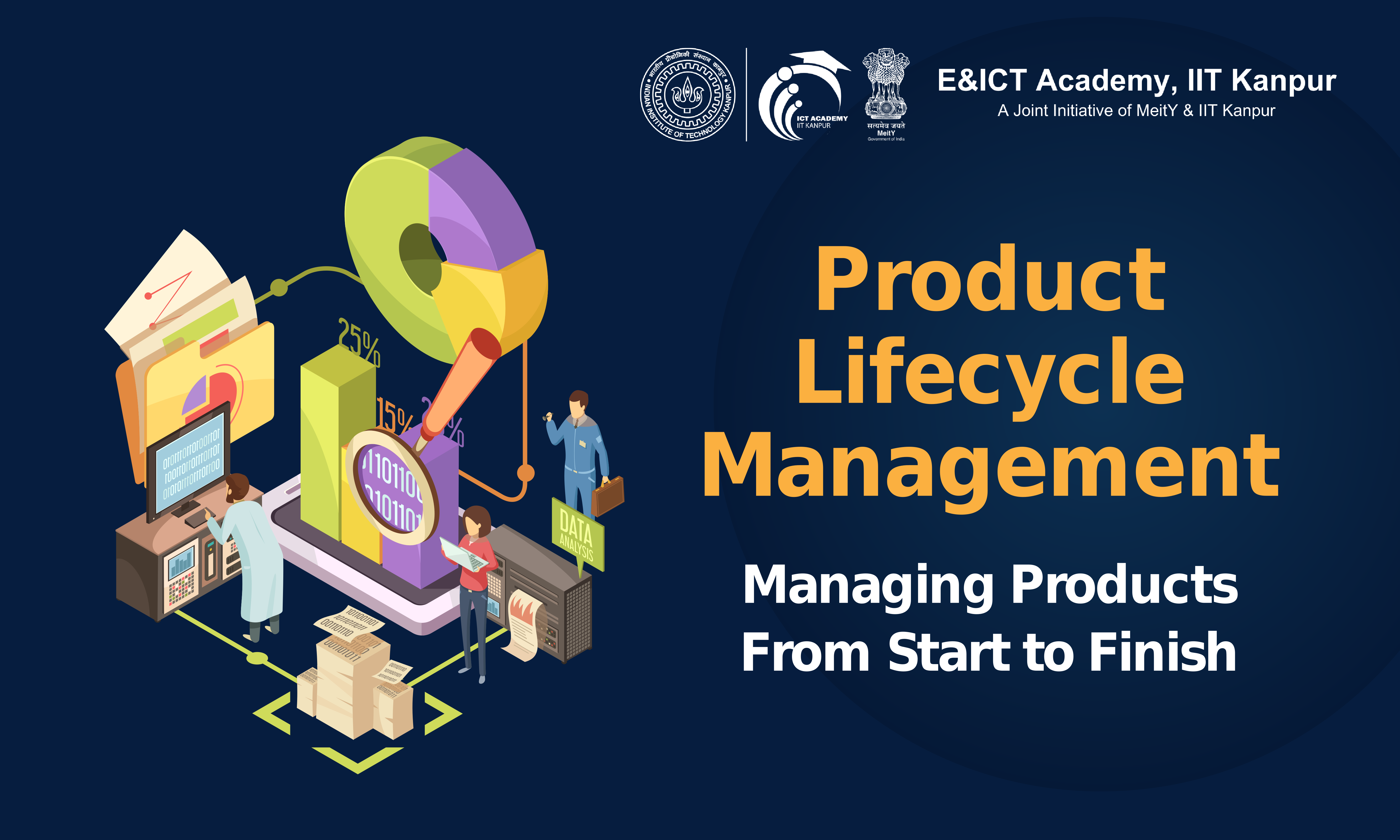
Product Lifecycle Management (PLM) is a strategy and system for managing all data, decisions, and processes related to a product from initial concept through design, manufacturing, service, and retirement. It connects people, tools, and systems so that everyone in the organisation works from a single, controlled, up-to-date product definition at every stage of the lifecycle.
PLM is distinct from general project management. It is specifically concerned with the product itself: its structure, requirements, specifications, versions, and approvals, kept consistent across every team and system that touches them.
Best AI Product Leadership Program
Nearly one-third of manufacturers say they can resolve quality issues but cannot trace their root cause, revealing how easily product lifecycle management data becomes fragmented across teams. PLM directly addresses this fragmentation by creating a single system of record for product data, engineering changes, and lifecycle decisions.
What PLM delivers in practice:
- Centralises product data (CAD, specifications, BOMs, documents) in one controlled system
- Standardises processes from ideation through end-of-life
- Connects engineering, manufacturing, quality, and supply chain around a single product definition
- Manages Bill of Materials (BOM) and engineering change management (ECO) workflows
- Integrates with ERP, CAD, MES, and other enterprise systems through a digital thread
PLM vs the Marketing Product Life Cycle: An Important Distinction
The marketing product life cycle describes how a product performs in the market across four phases: introduction, growth, maturity, and decline. It is primarily used by commercial and marketing teams to guide pricing, promotion, and distribution strategy.
Product Lifecycle Management is a different discipline entirely. It focuses on the product definition, its engineering data, manufacturing processes, service information, and retirement, managed across internal systems throughout the product's operational life.
A company can use the marketing life cycle framework to plan campaigns and investment decisions while simultaneously running a PLM system to manage BOM structures, engineering change orders (ECOs), and release workflows in the background. Both frameworks coexist and serve different functions.
Must Read: How to Build a Winning Product Strategy and Roadmap
The 5 Stages of Product Lifecycle Management
PLM operates as a continuous loop rather than a linear sequence. Information from later stages, particularly service data and field quality feedback, should feed back into earlier stages to inform future design decisions.
Stage 1: Concept and Ideation
The first PLM stage defines the opportunity and establishes feasibility. Teams capture customer problems, performance requirements, cost targets, regulatory constraints, and initial risk assessments.
A PLM system stores these early ideas, requirements, and business cases so that future decisions can be traced back to their original rationale. This traceability is critical in regulated industries where demonstrating that design requirements were defined before engineering work began is a compliance requirement.
Stage 2: Design and Development
Engineering transforms requirements into detailed designs: CAD models, technical drawings, simulation results, and the initial bill of materials. PLM software with strong PDM and BOM management keeps design files and part structures under version control so that teams always work from the current approved design.
Engineering change management (ECO) workflows in the PLM system handle the process of proposing, reviewing, and approving design changes through structured approval paths rather than informal email chains. This is where PLM pays for itself in highly iterative development environments.
Stage 3: Production and Launch
The product transfers from design into manufacturing and supply chain execution. The PLM system releases controlled BOMs and process documentation to ERP and Manufacturing Execution Systems (MES), eliminating the errors that occur when manufacturing teams work from informal or outdated specifications.
This is the stage where the PLM versus ERP distinction becomes operationally significant. PLM governs the product definition. ERP handles purchasing, inventory, cost accounting, and production scheduling. Both systems are required, and their integration at this stage is where incomplete implementations most commonly cause problems.
Also Read: Best Project Management Software in 2026: Top 10 Tools
Stage 4: Service and Support
After launch, PLM continues to provide value. Field feedback, quality incidents, and maintenance history can be linked back into the product's digital thread. When a field problem is identified, an engineer can access the specific configuration and revision of the product in service, identify which parts are affected, and issue an ECO to address the issue.
Without PLM, this service-to-design feedback loop typically breaks down. Field problems are resolved operationally without the fixes feeding back into the product record, leading to repeated failures and fragmented institutional knowledge.
Stage 5: End-of-Life
The product is retired, replaced, or redesigned. The PLM system supports last-time purchases, replacement part recommendations, and the regulatory documentation required for long-term liability management.
The EU is rolling out Digital Product Passports from 2026 onward across categories including batteries, textiles, electronics, and furniture. Each passport must carry structured data on materials, repairability, carbon footprint, and end-of-life handling. For manufacturers selling into European markets, the end-of-life stage now generates compliance documentation obligations that PLM systems are increasingly being configured to support.
How PLM Software Works
PLM software provides a controlled environment for all product information and the processes that govern it. The core mechanics that distinguish PLM from generic document management or project management tools are:
Data centralisation: All product data lives in a single system of record with clear relationships. A BOM is connected to the CAD files that define each component, the specifications those components must meet, the test results that verified compliance, and the engineering change records that modified any element. Every connection is maintained and auditable.
Version and change control: Every revision of every document, model, and BOM record is tracked. ECO workflows create structured, auditable trails for all modifications with defined review and approval steps before changes are released.
Workflow automation: Approvals, release processes, design reviews, and NPI stage gates are routed automatically through defined participants in defined sequences. Manual handoffs and email chains are replaced by governed process logic that creates a documented process record.
Digital thread integration: PLM software connects to CAD tools, ERP, MES, quality management systems, and increasingly IoT data platforms. This connectivity creates the digital thread, the continuous chain of traceable data from requirements through design, production, and service.
Access control and IP protection: Role-based permissions allow distributed teams, suppliers, and contract manufacturers to collaborate on specific product data without exposing sensitive proprietary information outside appropriate boundaries.
Core Components of a PLM System
Product Data Management (PDM)
PDM is the foundational layer of most PLM systems. It manages CAD files, drawings, and technical documents with check-in/check-out controls, revision history, and structured metadata. PDM ensures that no two engineers are simultaneously editing the same file with conflicting changes, and that the current approved version is always identifiable.
BOM Management
Bill of Materials management handles multi-level BOM structures, configuration variants, and the synchronisation between engineering BOMs (how a product is designed) and manufacturing BOMs (how it is built). Managing these two representations of the same product and keeping them aligned is one of the most practically valuable capabilities in PLM.
Engineering Change Management (ECO)
Structured ECO processes initiate, evaluate, approve, and implement design changes with full traceability. Every change is linked to the problem it solves, the affected parts and documents, the people who reviewed and approved it, and the release that implemented it. This audit trail is essential for regulated industries and valuable for any organisation that needs to understand why a product is the way it is.
Collaboration and Workflow
Cross-functional approval workflows route tasks and notifications to engineers, quality reviewers, manufacturing engineers, supply chain managers, and suppliers. This replaces the informal coordination that causes delays and introduces errors in unstructured environments.
Compliance and Quality
PLM systems support design history files, design reviews, CAPA (Corrective and Preventive Action) linkage, and regulatory documentation for industries including medical devices, aerospace, and automotive. The FDA's 2024 Quality Management System Regulation requires device manufacturers to meet ISO 13485 standards by February 2026, elevating documentation and design-control expectations. PLM systems automatically capture who did what, when, and why, making compliance demonstrations straightforward.
Lifecycle Analytics
Reporting and analytics across the product record identify bottlenecks in development cycles, change frequency by product family, quality trends, and cost implications of design decisions. This data is increasingly being used to feed AI-powered insights in modern PLM platforms.
Read More: Product Management in EdTech: Opportunities in 2026
Key Benefits of PLM
Faster time to market: Centralised product data and automated ECO processes eliminate the rework and miscommunication delays that occur when teams work from disconnected systems. PLM delivers measurable business results including faster launches, lower costs, higher quality, and enhanced team collaboration across engineering, business, and leadership departments.
Improved cross-team collaboration: A shared PLM system removes the information asymmetry that causes friction between engineering, manufacturing, quality, and procurement teams, particularly in organisations with multiple design centres or outsourced production.
Reduced development costs: Earlier identification of design issues through connected data and structured change management reduces the cost of late-stage changes, tooling reconfigurations, and expedited work.
Higher product quality: Traceable requirements, controlled modifications, and structured linkage between field problems and design data improve reliability and reduce field failures over successive product generations.
Regulatory compliance: In regulated industries, PLM organises the documentation, approval records, and traceability required for audit readiness. Design history files, change records, and configuration management documentation that would otherwise require significant manual effort to compile are maintained automatically.
Supply chain transparency: Strong BOM management and connected supplier data enable accurate impact analysis when parts change, supply is disrupted, or compliance requirements evolve.
PLM vs Related Systems
PLM vs ERP
| Aspect | PLM | ERP |
|---|---|---|
| Primary focus | Product definition and lifecycle | Business execution (finance, inventory, orders) |
| Core data | CAD, specifications, BOMs, ECOs | Transactions, costs, inventory, procurement |
| Main users | Engineering, product, quality, manufacturing engineering | Finance, supply chain, operations |
| Relationship | Feeds released product structures to ERP | Uses PLM outputs to plan and execute |
PLM versus ERP is definition versus execution. Both are required, and their integration is where the value of each is multiplied.
PLM vs PDM
| Aspect | PLM | PDM |
|---|---|---|
| Scope | Full lifecycle, cross-functional | Engineering data management |
| Processes | ECO, quality, compliance, projects, NPI | File control and CAD revision management |
| Integration | CAD, ERP, MES, quality, service | Primarily CAD and technical documents |
PDM is often a starting point. Many organisations begin with PDM for engineering data control and expand into full PLM when cross-functional workflow needs emerge.
PLM vs PPM
| Aspect | PLM | PPM |
|---|---|---|
| Focus | Managing the product and its data | Managing the portfolio of projects and investments |
| Decisions | Design, change, release, compliance | Prioritisation, resourcing, budgeting |
PLM and PPM are complementary. PLM manages the product artefacts. PPM manages the business decision about which products to invest in and at what level.
PLM vs Product Management
| Aspect | PLM | Product Management |
|---|---|---|
| Orientation | Technical and operational | Market and customer-centric |
| Tools | PLM software, PDM, CAD, ECO | Roadmapping, analytics, customer feedback |
| Key question | How is the product defined and controlled? | What should the product be and for whom? |
Product management defines what and why. PLM enforces how and with what data. Both disciplines are necessary and neither replaces the other.
Leading PLM Tools and Software in 2026
When evaluating PLM platforms, the decision criteria should reflect deployment scale, industry requirements, and integration needs rather than feature checklists alone.
Siemens Teamcenter: The most widely deployed PLM platform among large industrial manufacturers. Strongest in complex multi-domain product development including automotive, aerospace, and heavy equipment. Extensive BOM management, simulation integration, and manufacturing process planning capabilities.
PTC Windchill: Strong in industrial and discrete manufacturing with deep CAD integration (Creo) and strong IoT connectivity for digital thread use cases. Well-suited for organisations running closed-loop quality management across engineering and service.
Arena PLM: Cloud-native PLM targeting electronics, medical devices, and high-tech manufacturers. Strong in BOM management, ECO workflows, and supply chain collaboration. Lower implementation complexity than legacy enterprise platforms.
Autodesk Fusion Manage: Integrated with the Fusion 360 design platform. Well-suited for design-led organisations that want PLM integrated into the design workflow rather than as a separate downstream system.
Oracle Agile PLM: Part of the Oracle ecosystem. Strong in supply chain integration and compliance management. Widely deployed in healthcare, electronics, and consumer goods.
Propel: Salesforce-native PLM that integrates product development with commercial operations. Strong for organisations that want PLM connected to CRM and customer-facing data.
Duro: Lightweight cloud PLM for early-stage hardware companies. Lower cost of entry with strong BOM management and collaboration features for small teams.
The key 2026 criteria for platform selection: cloud-native deployment capability, strength of BOM and ECO functionality, digital thread integration depth with CAD and ERP, and readiness to support Digital Product Passport data requirements for organisations selling into European markets.
Must Read: Best Project Management Software in 2026
The Future of PLM: 2026 and Beyond
AI in PLM: Machine learning is being applied to auto-classify parts for design reuse, suggest alternatives during ECO processes, predict the risk and downstream impact of proposed changes, and detect anomalies in quality data before they escalate into field problems. Modern PLM platforms now expose low-code and no-code configuration tools, allowing power users to adapt workflows and dashboards with far less day-to-day IT involvement.
Digital twin and digital thread: High-fidelity digital twins of products and manufacturing systems depend on accurate, connected lifecycle data from PLM. The digital thread, the continuous traceable chain of data from requirements through production and into service, is the data architecture that makes meaningful digital twins possible.
Digital Product Passport and sustainable PLM: The EU's Digital Product Passport rollout from 2026 onward affects batteries, textiles, electronics, and furniture, with each passport required to carry structured data on materials, repairability, carbon footprint, and end-of-life handling. Many manufacturers are now looking to manage this data through their PLM systems. This regulatory driver is making PLM investment more compelling for manufacturers that previously considered it optional.
Cloud-native and composable architectures: Industry voices increasingly advocate composable PLM architectures built on open APIs. This approach assembles best-of-breed capabilities instead of relying on a single monolithic suite. Cloud-native PLM shortens deployment timelines and reduces the infrastructure investment that previously made PLM inaccessible to mid-sized manufacturers.
PLM in the Indian Manufacturing Context
India's manufacturing expansion under the PLI scheme is creating significant new demand for PLM capability, particularly in electronics, pharmaceuticals, automotive components, and defence manufacturing.
Indian manufacturers supplying to global OEMs are increasingly required to meet their customers' PLM governance standards, including structured ECO processes, BOM traceability, and quality management documentation. This is converting PLM from an optional investment to a supply chain compliance requirement for many Indian exporters.
The Digital Product Passport requirements for European markets affect Indian exporters in textiles, electronics, and automotive components. Indian manufacturers selling finished goods or components into EU supply chains will need to provide structured lifecycle data that PLM systems are positioned to generate and maintain.
Indian pharmaceutical manufacturers operating under FDA oversight face the same documentation and design control requirements that are driving PLM adoption in Western medical device manufacturers. The 2026 ISO 13485 compliance deadline under the FDA's Quality Management System Regulation is directly relevant to Indian pharma companies with US market exposure.
Cloud-native PLM platforms are particularly relevant for the Indian mid-market because they reduce the infrastructure investment and implementation complexity that made enterprise PLM inaccessible to all but the largest manufacturers.
Frequently Asked Questions
What are the five stages of product lifecycle management?
The five PLM stages are concept and ideation (opportunity definition and requirements capture), design and development (engineering design, CAD, and BOM creation), production and launch (transfer to manufacturing with controlled documentation), service and support (field performance monitoring and ECO-driven improvements), and end-of-life (retirement management, regulatory documentation, and sustainability compliance). The stages operate as a continuous loop where information from later stages feeds back into earlier ones.
What is the difference between PLM and ERP?
PLM manages the product definition: its structure, specifications, design data, engineering changes, and compliance documentation. ERP manages business execution: purchasing, inventory, production scheduling, cost accounting, and financial reporting. PLM feeds released product structures to ERP. ERP uses PLM outputs to execute transactions. Both systems are required for manufacturers and operate in complementary rather than competing roles.
What is engineering change management in PLM?
Engineering change management (ECO) is the structured process for proposing, reviewing, approving, and implementing changes to product designs. PLM systems provide ECO workflows that route change requests to defined reviewers, capture approvals with timestamps and comments, link changes to the problems they address, and release updated product data once all approvals are complete. This audit trail is essential for regulated industries and valuable for any organisation managing complex products with distributed teams.
What is a Digital Product Passport and how does PLM support it?
A Digital Product Passport is a structured digital record of a product's materials, environmental impact, repairability, and end-of-life characteristics. The EU is mandating Digital Product Passports from 2026 onward for batteries, textiles, electronics, and furniture sold in European markets. PLM systems are positioned to generate and maintain this data because they already manage the materials, manufacturing processes, and lifecycle information that Digital Product Passports require. Indian manufacturers exporting to the EU need to account for this requirement when evaluating PLM investment.
How long does PLM implementation take?
A focused pilot on a single product family or high-impact workflow can be operational in a few weeks to a few months using cloud-native platforms. Full multi-site enterprise PLM rollouts, including ERP integration, data migration, and process harmonisation across multiple engineering centres, typically take 12 to 24 months. The primary implementation risk is change management rather than technology. Teams accustomed to informal coordination through email and shared drives require significant training and process adoption support.
Is PLM suitable for small and mid-sized manufacturers?
Yes. Cloud-native PLM platforms including Arena, Propel, and Duro have made PLM accessible to companies that could not justify the cost and complexity of legacy enterprise platforms. For manufacturers with regulated products, complex variants, or distributed supply chains, PLM provides value regardless of company size. The threshold where PLM investment becomes clearly justified is typically when product complexity, team distribution, or regulatory requirements exceed what spreadsheets and informal coordination can reliably manage.