Digital Marketing vs Traditional Marketing: 15 Key Differences in 2026
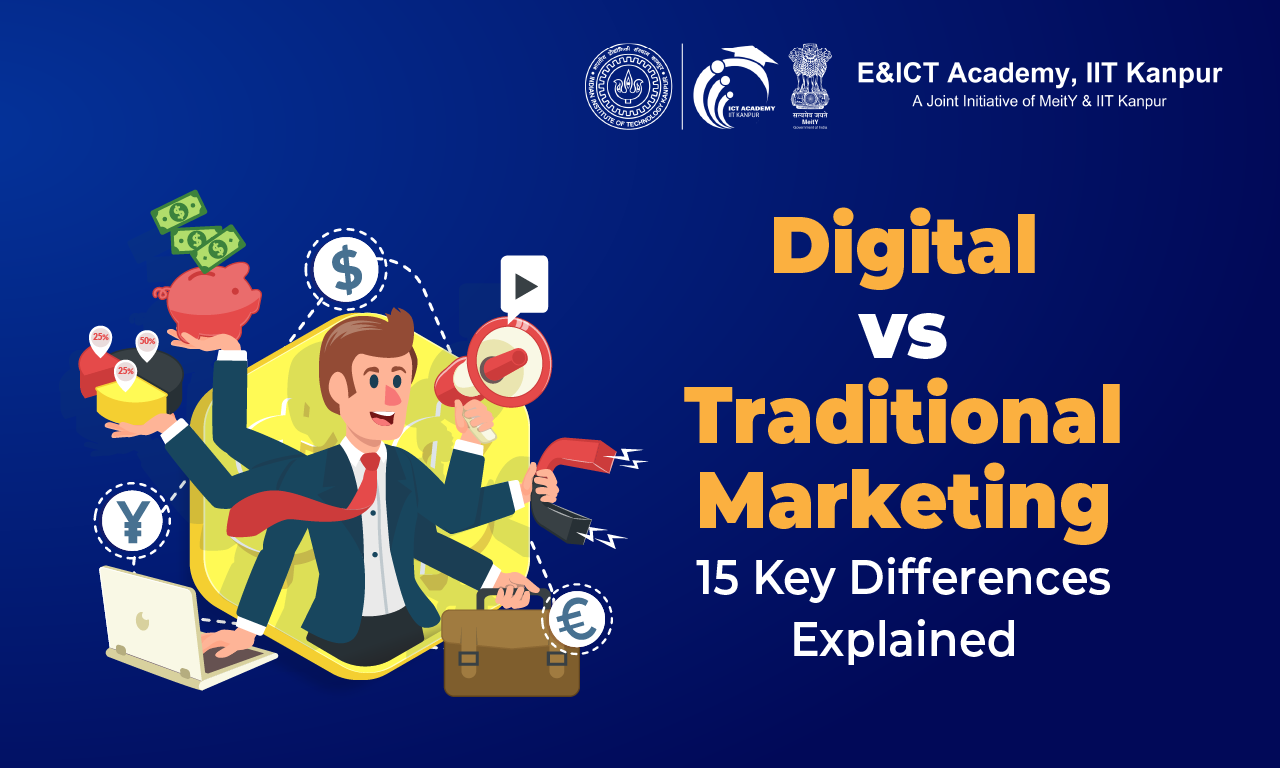
Traditional marketing uses offline channels like TV, radio, print, and billboards to reach broad audiences with one-way messages, while digital marketing uses online channels like search, social media, email, and paid ads to reach targeted audiences with two-way, measurable campaigns.
In 2026, the real difference is not only the medium but the level of control, precision, and accountability each approach offers.
Digital vs Traditional Marketing at a Glance
| Factor | Traditional Marketing | Digital Marketing |
|---|---|---|
| Reach | Local or regional | Local, national, or global |
| Cost | High upfront investment | Flexible, any starting budget |
| Targeting | Broad demographic | Precise by interest, behaviour, intent |
| Measurability | Hard to track | Real-time data on every metric |
| Engagement | One-way communication | Two-way, interactive |
| Speed | Weeks to plan and launch | Live within hours |
| Flexibility | Fixed once published | Editable any time |
| Personalisation | Generic mass messaging | Individual-level customisation |
| Longevity | Short-lived placements | Long-term assets (SEO, video, blogs) |
| Best for | Brand credibility, local trust, older audiences | Growth, leads, ROI, younger audiences |
In 2026, digital advertising accounts for over 74% of global ad spend, so the real question is not “which is better”, but “how and when to use each effectively.”
Best Digital Marketing Course Online: Enroll Now
What Is Traditional Marketing?
Traditional marketing refers to pre-internet promotional methods that use offline channels to reach audiences at scale.
- Television and radio advertising.
- Print media: newspapers, magazines, brochures.
- Outdoor ads: billboards, transit posters, hoardings.
- Direct mail: flyers, catalogues, postcards.
- Event sponsorships and in-person activations.
It remains powerful for building broad brand awareness, reaching older demographics, creating a sense of authority, and strengthening local trust-but it is expensive, hard to measure, and impossible to adjust once a campaign is live.
What Is Digital Marketing?
Digital marketing promotes products, services, or brands through online channels where every action is trackable and adjustable in real time.
- SEO for organic visibility in search engines.
- PPC ads on Google Ads and Meta Ads.
- Social media marketing on Instagram, LinkedIn, YouTube.
- Content marketing: blogs, videos, guides, podcasts.
- Email marketing for nurturing and retention.
- Affiliate and influencer marketing.
- Generative Engine Optimisation (GEO) for AI-powered search like Google AI Overviews, ChatGPT, and Perplexity.
In 2026, AI-driven search engines directly answer user questions, so brands must optimise not just for rankings but for being cited as trusted sources by these AI systems-something traditional marketing cannot touch.
Digital marketing: How to start a career
15 Key Differences Between Digital and Traditional Marketing
1. Audience Reach
Traditional campaigns are geographically limited-newspaper ads reach one city, radio spots reach that station’s area.
Digital campaigns can reach local, national, and global audiences simultaneously, even for small and mid-sized businesses with modest budgets.
2. Cost and Budget Flexibility
Traditional marketing demands large upfront spends for production and media buying, regardless of performance.
Digital marketing lets you start small, test creatives and audiences, pause what fails, and scale what works-perfect for startups and smaller brands.
3. Audience Targeting
Traditional targeting is broad, usually by channel and general demographics (e.g., sports viewers, city readers).
Digital targeting is granular, based on intent, interests, behaviour, job title, income bracket, and more, ensuring ads reach people most likely to buy.
4. Measurability and Analytics
Traditional campaigns offer only rough estimates of reach and almost no visibility into conversions.
Digital campaigns track impressions, clicks, time on page, conversions, and cost per acquisition in real time through tools like GA4 and Meta Business Suite.
5. Speed of Execution
Traditional campaigns often take weeks or months from concept to launch because of production, approvals, and media schedules.
Digital campaigns can be live within hours and quickly adapted to real-time events or trends.
6. Flexibility and Real-Time Optimisation
Once a print ad is printed or a hoarding installed, the message is fixed until the booking ends.
Digital creatives, copy, targeting, and budgets can be tweaked anytime, enabling continuous optimisation instead of “set and forget.”
7. Personalisation
Traditional marketing pushes the same message to everyone who sees or hears it.
Digital marketing can personalise emails, website experiences, and ads based on previous behaviour, purchases, and segmentation, even at large scale.
Also Read: High Paying Career in Digital Marketing
8. Customer Engagement and Two-Way Communication
Traditional channels rarely allow direct response within the same medium.
Digital channels invite conversation-comments, DMs, replies, reviews-helping brands build community and trust over time.
9. ROI Measurement
With traditional marketing, connecting sales outcomes to specific campaigns is largely guesswork.
Digital marketing provides end-to-end attribution, showing which ad a user saw, what content they engaged with, and which landing page converted them, making ROI visible and comparable across campaigns.
10. Content Longevity
Traditional content is short-lived: once the paper is recycled or the TV slot ends, the campaign stops working.
Digital assets like blog posts, YouTube videos, and pillar pages can drive traffic and leads for years without additional media spend.
11. Audience Behaviour Insights
Traditional campaigns provide almost no behavioural feedback beyond broad ratings or circulation numbers.
Digital platforms reveal when audiences are active, which devices they use, where they drop off in funnels, and which content resonates most, informing both marketing and product decisions.
12. Scalability
Scaling traditional marketing usually means simply spending more for more placements.
Digital marketing can become more efficient as it scales, thanks to better data, learning algorithms, and improved relevance scores.
13. Accessibility for Small Businesses
Historically, traditional channels like TV and national print were out of reach for smaller businesses.
Digital marketing lets small and regional brands run highly targeted, performance-focused campaigns that compete effectively with larger players.
14. Trust and Brand Perception
Traditional media placements convey authority and scale, especially to older audiences used to TV, print, and outdoor.
Digital trust is built through reviews, case studies, social presence, and consistent helpful content-often influencing purchase decisions more directly than any single ad.
15. Alignment with Modern Consumer Behaviour
Consumers now research online, read reviews, check social media, and even consult AI assistants before buying.
Traditional marketing hits people in physical spaces, while digital marketing accompanies them throughout this research and decision journey, especially for audiences under 45.
Also Read: Performance Marketing Skills
When to Use Traditional Marketing
- Large launches that need mass awareness fast, such as national TV or metro-wide outdoor campaigns.
- Targeting older demographics with lower digital usage.
- Categories where authority and seriousness are critical (healthcare, finance, luxury).
- Local campaigns where community visibility is the main objective.
- Reinforcing digital campaigns with offline touchpoints for stronger recall.
When to Use Digital Marketing
- You have limited budget and must prove ROI before scaling.
- Your audience researches and buys online, especially under 45.
- You run an e-commerce or lead generation–driven business.
- You need measurable cost per lead or sale and clear attribution.
- You want to build long-term organic assets via SEO and content.
- You are entering new markets and need efficient, testable reach.
Why the Best Strategies Combine Both
The strongest 2026 marketing plans do not choose digital or traditional-they orchestrate both.
Traditional builds broad awareness and credibility; digital converts that attention into measurable leads, sales, and loyalty, with Indian brands in particular benefitting from local offline presence plus national digital reach.
Frequently Asked Questions
Which is better in 2026: digital or traditional?
For most businesses, digital marketing delivers stronger, more measurable returns, but the ideal approach depends on your audience, goals, and budget, and often involves both.
Is traditional marketing still relevant?
Yes-especially for older audiences, rapid mass awareness, and sectors where appearing in established media strongly signals credibility.
What is the main advantage of digital vs traditional?
Measurability and optimisation: every action in digital campaigns can be tracked, attributed, and improved based on real data.
How has AI changed this comparison in 2026?
AI has widened digital’s lead by enabling predictive targeting, automated optimisation, personalisation at scale, and new GEO strategies for AI-driven search-capabilities traditional marketing cannot match.
What is omnichannel marketing?
Omnichannel marketing coordinates digital and traditional touchpoints into one consistent experience, so customers see a unified message across TV, search, social, email, and offline placements.