Digital Marketing Funnel Explained: Stages, Examples & How to Build Yours
If you are stepping into digital marketing or planning a career switch, understanding the digital marketing funnel is essential. In today’s competitive online landscape, brands cannot rely on random ads or guesswork-they need a structured path to turn visitors into customers.
A well-designed funnel guides users from first discovering your brand to finally making a purchase. It improves lead generation, boosts conversions, and gives you a clear blueprint for customer engagement.
Best Digital Marketing Course: Enroll Now
What Is a Digital Marketing Funnel?
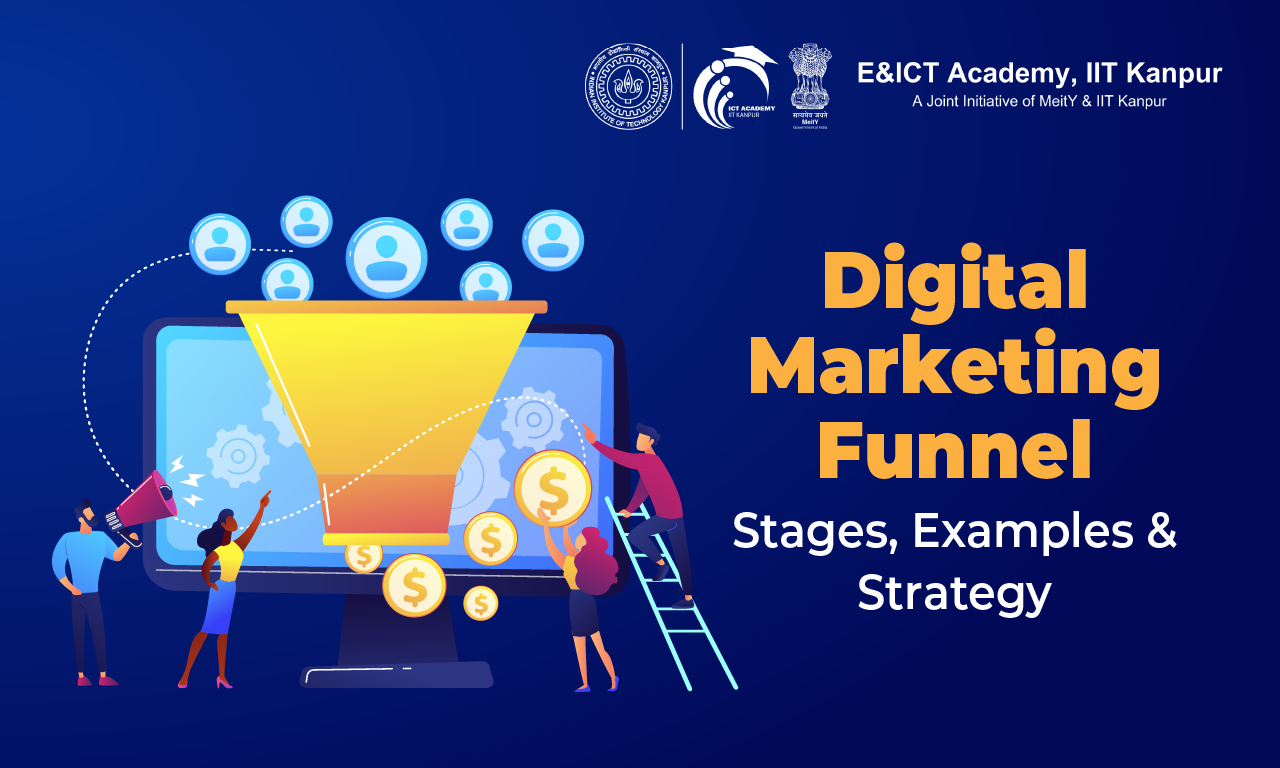
A digital marketing funnel is a step-by-step process that moves potential customers from awareness to conversion.
Think of it like a funnel:
- A large number of people discover your brand at the top.
- Fewer people move into the middle as they compare options.
- The most interested users reach the bottom and convert.
Most funnels are divided into three core stages:
- Awareness
- Consideration
- Decision
Each stage needs a different marketing approach. Businesses use landing pages, email campaigns, and customer journey mapping to guide users through the funnel.
Also Read: Scope of Digital Marketing
Digital Marketing Funnel Stages Explained
To use funnels effectively, you need to understand what happens at each stage and what your goal is.
1. Awareness Stage Marketing
This is the first stage, where potential customers discover your brand while searching for information or solutions.
Your goal: Capture attention and educate users.
Common strategies:
- SEO-optimised blog articles
- Social media posts and threads
- Educational videos and shorts
- Top-of-funnel paid ads
- Infographics, checklists, and guides
Example: A company offering digital marketing courses might publish an article explaining what a marketing funnel is and why it matters.
This stage is focused on attracting traffic and generating early interest or leads.
Also Read: AI for SEO in 2026
2. Consideration Stage Marketing
At this stage, users know their problem and are actively comparing different solutions.
Your goal: Build trust and help users evaluate options.
Effective strategies:
- Case studies and success stories
- Product or service comparison pages
- Webinars, workshops, and tutorials
- Email nurturing sequences
- Free trials, demos, or sample lessons
Example: Someone searching “digital marketing funnel strategy for small businesses” is likely comparing tools, courses, or agencies.
This stage is about engagement, education, and evaluation.
Also Read: Performance Marketing Skills
3. Decision Stage Marketing
In the decision stage, prospects are ready to buy but may need a final reason to act now and choose you over competitors.
Your goal: Convert warm leads into paying customers.
Common strategies:
- Customer testimonials and reviews
- Limited-time offers, bonuses, or discounts
- Personalised email follow-ups
- High-converting sales pages
Businesses also apply CRO (Conversion Rate Optimization) techniques like:
- Clear, compelling CTAs (Call-to-Action buttons)
- Fast-loading pages
- Simplified checkout or enquiry forms
This stage focuses on turning intent into action.
Also Read: High Paying Career in Digital Marketing
How to Build a Digital Marketing Funnel Step by Step
Building a funnel is less about complex tools and more about following a clear, structured process.
1. Understand Your Target Audience
Start by defining who you want to attract and what they care about.
Useful tools:
- Google Analytics and Search Console
- Customer surveys and interviews
- Social media and community insights
2. Map the Customer Journey
Identify how people currently interact with your brand across touchpoints.
Key touchpoints:
- Social media posts and ads
- Blog articles and resource pages
- Email campaigns and newsletters
- Product, pricing, and service pages
3. Create Content for Each Funnel Stage
Match your content to what users need at each stage.
Top of Funnel (Awareness):
- Blogs and how-to guides
- Short videos and reels
- Educational social posts
Middle of Funnel (Consideration):
- Case studies and whitepapers
- Webinars and detailed tutorials
- Email sequences and comparison content
Bottom of Funnel (Decision):
- Product demos and free trials
- Testimonials and success stories
- Offer-focused sales pages
4. Optimize Landing Pages and Conversion Paths
Your landing pages link content to conversions.
Make sure they include:
- A clear, specific value proposition
- Strong, visible CTAs
- Fast loading times across devices
- Social proof in the form of reviews or results
5. Measure and Improve Funnel Performance
Funnels are not “set and forget.” They need continuous testing and refinement.
Key metrics to track:
- Website traffic and source breakdown
- Lead generation and opt-in rates
- Email open and click-through rates
- Conversion rate and cost per acquisition
How Digital Marketing Funnels Increase Conversions
Businesses using structured funnels typically see better results because they guide users deliberately instead of pushing for instant sales.
Key benefits:
- Stronger lead nurturing over time
- Higher conversion rates at each stage
- Deeper understanding of customer behaviour
- Improved ROI from paid and organic campaigns
By building trust with relevant content and personalised communication, you create a smoother, more effective customer journey.
Final Words
A digital marketing funnel is a core system for turning online visitors into loyal customers. When you understand the awareness, consideration, and decision stages, you can design a clear path that supports users instead of overwhelming them.
The key is consistency and iteration. A well-built funnel that attracts the right audience, delivers valuable content, and improves based on data becomes a long-term growth engine for your business.
Want help designing your funnel or planning your digital marketing career? Reach out to us and let’s talk strategy.
FAQs
How do small businesses create a marketing funnel?
Small businesses usually start by attracting traffic through SEO or social media, then capture leads via landing pages and nurture them through email before directing them to an optimised sales or enquiry page.
Why is a marketing funnel important?
A funnel brings structure to your marketing. It helps you generate better-quality leads and guides customers step by step instead of relying on one-off campaigns.
What is a digital sales funnel?
A digital sales funnel focuses specifically on converting website visitors into paying customers using targeted content, lead nurturing, and conversion optimisation.